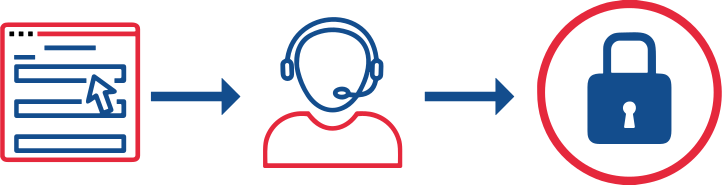


A caller from Newark, Jersey City, the Bronx, or Queens answers a Medicare-related question and then gets transferred live to a licensed agent who can continue the conversation right away. That is the basic idea behind live transfer Medicare leads. For Medicare Advisors Insurance Group LLC / MedicareABC, the important part is not just speed; it is making sure the transfer came from a real consumer conversation, that consent was clear, and that the follow-up call can actually help with plan comparisons in New Jersey and New York.
For agents, live transfers can create a more immediate conversation than a web form or a cold list. For beneficiaries, caregivers, and family members, they should still expect a careful review of doctors, prescriptions, counties, ZIP code availability, and enrollment timing. The main takeaway is simple: a live transfer can be useful, but only when the source, consent, and Medicare fit are checked before anyone discusses enrollment. Medicare Advisors helps people compare Medicare Advantage Part C, Part D, Medicare Supplement / Medigap, dental, vision, life, and funeral insurance options with licensed agents in New Jersey and New York.
What live transfer Medicare leads mean in plain English
A live transfer Medicare lead is a phone call that is passed in real time from one call center or intake team to a licensed insurance agent. Instead of leaving a voicemail or waiting for a callback, the prospect is connected immediately while the interest is still fresh. In Medicare sales, that usually means the caller has asked about plan coverage, drug costs, or local Medicare help and is then moved to an agent who can continue the conversation.
These calls are often used when someone is actively shopping during AEP, MA-OEP, a Special Enrollment Period, or when a family is helping a parent review options after retirement. The transfer can save time, but it can also create compliance risk if the caller did not clearly agree to be transferred or if the lead source is unclear.
Takeaway: A live transfer is a same-call handoff to an agent, and the quality depends on consent, intent, and documentation.
Why live transfer leads are used in Medicare outreach
Medicare decisions are often time-sensitive. A person may be comparing plan networks before a doctor visit, checking whether a prescription is on formulary, or trying to understand a premium change before the next enrollment window. Live transfer leads are used because they can connect the consumer with a licensed agent while the question is still active.
- Faster contact: The consumer is already on the phone, so the conversation starts sooner.
- Higher context: The caller usually has a specific concern, such as drugs, doctors, or plan costs.
- Better follow-through: The agent can ask qualifying questions immediately and reduce back-and-forth.
- Local fit: In NJ and NY, county and ZIP-code differences can make quick verification important.
That said, fast contact is not the same as a good fit. Agents still need to verify the consumer’s situation and avoid rushing into a recommendation.
Takeaway: Live transfers can be efficient, but Medicare conversations still need careful review.
How live transfer calls work in New Jersey and New York markets
New Jersey and New York are not one-size-fits-all markets. A caller in Elizabeth may have different plan options than someone in Bergen County or Staten Island. A person in Yonkers may have different provider access than someone in Camden or Long Island. That is why live transfer calls in these states should quickly move into ZIP code, county, provider, and prescription checks.
Here is a practical flow:
- A consumer answers a Medicare-related call or form follow-up.
- The caller explains interest, such as Medicare Advantage, Part D, or Medigap.
- The person agrees to be transferred to a licensed agent.
- The agent receives the call live and confirms the basics: name, county, ZIP code, Medicare status, and need.
- The agent checks whether doctors, pharmacies, and prescriptions may fit the available plans in that area.
Because plan availability varies by county, carrier, and enrollment period, agents should avoid making assumptions based on a nearby city. A plan sold in Hudson County may not be available in another county, and a carrier network can change from one ZIP code to the next.
Takeaway: In NJ and NY, live transfer calls should move quickly into local eligibility and network checks.
Who benefits from live transfer leads
Live transfer leads can help both the sales side and the consumer side when they are handled responsibly. For agents, they may reduce wasted callbacks. For beneficiaries and caregivers, they can shorten the time between a question and a useful explanation.
- Agents and agencies: Can speak with a motivated consumer in the moment.
- Medicare shoppers: Can ask detailed questions while the issue is still top of mind.
- Caregivers and adult children: Can join the conversation and help verify doctors, medications, and costs.
- Local agencies: Can tailor support to county-level realities in New Jersey and New York.
Still, not every live transfer will be a strong opportunity. Some callers are early in research, some need official Medicare guidance first, and some simply want help comparing options without committing to a plan call.
Takeaway: Live transfers work best when the caller already has a real Medicare question.
Compliance and consent questions to verify before accepting a transfer
Before taking a live transfer call, a licensed agent should verify that the consumer understood what was happening and agreed to it. This protects the consumer and the agency. For Medicare marketing, good process matters as much as lead volume.
- Did the consumer knowingly agree to speak with a licensed agent?
- Was the transfer related to the Medicare topic the consumer requested?
- Was the source of the lead clear and documented?
- Did the caller understand whether the contact was educational, marketing, or enrollment-related?
- Was there any confusion about who was calling or why the call was being transferred?
Agents should also remember that CMS marketing rules, carrier rules, and telemarketing practices can affect how outreach is handled. For broader context, review the official CMS guidance on Managed Care Marketing and related educational materials from CMS Standard Medicare Educational Materials.
Takeaway: A valid transfer starts with clear consent and a documented source.
How ZIP code, county, and carrier availability affect Medicare conversations in NJ and NY
Local availability matters. A plan conversation in Newark may differ from one in Hackensack, Paterson, Plainfield, or Union City. In New York, the options can differ between the Bronx, Queens, Brooklyn, Manhattan, Staten Island, and Long Island. County-level networks and ZIP-code-specific plan service areas can change premiums, provider access, and formularies.
Agents should be ready to verify:
- County and ZIP code: Determines which plans are offered.
- Doctors and specialists: Network participation can vary by carrier and plan.
- Pharmacies: Preferred pharmacy status may affect out-of-pocket cost sharing.
- Prescription list: A formulary check can change the conversation quickly.
- Enrollment timing: A person may have to wait for the right enrollment period.
For beneficiaries and caregivers, a local call should never skip these basics. The best next step is often to compare plan details on the official Medicare Plan Compare tool and then review options with a licensed agent.
Takeaway: In NJ and NY, county and ZIP differences can change which Medicare options are realistic.
Lead quality checklist for agents
Not every transferred call has the same value. A useful lead usually includes a real conversation, clear intent, and enough information to help the consumer. Before spending time on follow-up, agents can use a simple quality check.
| Quality factor | What to look for | Why it matters |
|---|---|---|
| Conversation length | Enough time for the consumer to explain needs | Short, rushed calls may not reflect true interest |
| Intent | Caller asked about Medicare coverage, doctors, drugs, or costs | Indicates a real need for guidance |
| Eligibility basics | Age, Medicare status, or enrollment window | Helps avoid wasted calls on ineligible situations |
| Source transparency | Lead source can be identified and tracked | Supports compliance and performance review |
| Local match | ZIP code and county were captured | Essential for plan availability in NJ and NY |
Agents should also watch for repeated transfers, unclear scripts, or callers who do not remember giving permission. Those are signs to slow down and verify before continuing.
Takeaway: Better lead quality usually starts with clearer intent, better source data, and local details.
Questions agents should ask during or after a live transfer
Once the call is live, the goal is to keep it practical and respectful. A short set of questions can identify whether the conversation should continue, be scheduled for later, or be referred to another resource.
- What ZIP code and county do you live in?
- Do you have Original Medicare, a Medicare Advantage plan, or are you new to Medicare?
- Which doctors or specialists do you want to keep?
- Which prescriptions do you take regularly, and which pharmacy do you use?
- Do you need dental or vision benefits as part of the conversation?
- Are you in an enrollment window right now?
- Would you like to compare plan types before making a decision?
These questions are especially useful when the caller is helping a parent, spouse, or relative. A caregiver often knows the doctor list and prescriptions better than the beneficiary does.
Takeaway: The best live transfer calls are short, focused, and built around verification.

How beneficiaries and caregivers should evaluate a Medicare call
If you are the person receiving the call, a live transfer should feel clear and respectful, not rushed or confusing. You should know who you are speaking with, why the call happened, and what the next step will be. If anything feels unclear, pause and ask questions.
- Ask the agent to explain the plan type in plain language.
- Confirm whether your doctors and hospitals are in network.
- Check whether your medications appear on the formulary.
- Ask what pharmacy tier or preferred pharmacy rules may apply.
- Review monthly premiums and expected out-of-pocket exposure.
- Ask whether the plan fits your county or ZIP code.
People in New Jersey and New York can also compare options using official resources like Medicare.gov Official Site and speak with free counseling programs such as New Jersey SHIP or New York HIICAP.
Takeaway: Consumers should verify doctors, drugs, costs, and local availability before agreeing to anything.
Local examples: Newark, Jersey City, Elizabeth, Bronx, Queens, Brooklyn, Long Island, and nearby counties
Local Medicare conversations often sound different depending on where the beneficiary lives. A caller in Elizabeth may ask about nearby specialists in Union County. A person in Jersey City or Newark may want to know whether a hospital or primary care doctor is in network. A family in the Bronx, Queens, or Brooklyn may focus on prescription coverage, transportation, or long-term provider relationships. Someone on Long Island may ask whether a plan has access that works across multiple ZIP codes.
That is why Medicare Advisors serves families across New Jersey and New York with licensed agents who understand local plan comparisons. The agency helps people in places like Perth Amboy, Plainfield, Passaic, Camden, Bergen County, Hudson County, Union County, Middlesex County, Essex County, Yonkers, Manhattan, Staten Island, and nearby communities.
For beneficiaries, the local question is usually not “What is the newest plan?” but “Will this plan work where I live, where I get care, and where I fill prescriptions?”
Takeaway: Local Medicare help should reflect the city, county, and provider network the person actually uses.
Comparison table: live transfer leads vs. internet leads vs. cold calling vs. referrals
| Lead type | How it starts | Strengths | Watchouts |
|---|---|---|---|
| Live transfer | Consumer is handed to an agent during the same call | Immediate conversation, high intent | Consent and source verification must be clear |
| Internet lead | Consumer fills out a form online | Good for follow-up and documentation | May need extra confirmation before appointment |
| Cold calling | Agent dials without prior consumer interaction | Can reach broad audiences | Lower trust and more compliance concerns |
| Referral | Friend, family member, or client shares contact | Often higher trust | Still requires proper consent and fact-finding |
For many agencies, live transfers are useful because they create momentum. For many consumers, a referral or scheduled conversation may feel calmer and easier to review. The right choice depends on the person and the compliance process behind the call.
Takeaway: Live transfers are only one lead type, and they work best when the process is clean and documented.
When to compare Medicare Advantage, Part D, Medigap, dental, and vision options
A live transfer should not be treated as an automatic enrollment conversation. Sometimes the right next step is simply comparison. That is especially true when the caller has multiple doctors, several prescriptions, or wants predictable cost-sharing.
Common comparison points include:
- Medicare Advantage Part C for bundled medical coverage and network-based care
- Medicare Part D for prescription drug coverage
- Medicare Supplemental / Medigap for help with certain Original Medicare cost-sharing
- Dental Insurance for oral care needs not usually covered by Original Medicare
- Vision Insurance for eye exams, glasses, and related needs
For Medigap comparisons, official information from Medicare Supplement Insurance Medigap and Compare Medigap Plan Benefits can help consumers understand standardized benefits.
Takeaway: A live transfer often works best when it leads to thoughtful comparison, not a rushed decision.
How Medicare Advisors / MedicareABC supports New Jersey and New York families
Medicare Advisors Insurance Group LLC, known locally as MedicareABC, helps Medicare beneficiaries, caregivers, and families compare coverage with licensed insurance agents in New Jersey and New York. The agency works with people who want help understanding plan options and local availability without making promises about guaranteed savings or guaranteed approval.
Helpful next steps include using the Find Agents page to connect with a licensed agent or visiting Contact Medicare Advisors for direct support. If you want company background and common questions, the FAQ page is also a good place to start.
If you are evaluating Medicare as a Spanish-speaking family, Medicare.gov also offers Medicare.gov en Español and Spanish-language resources for Medicare Parte D en Español and Medigap en Español.
Takeaway: Medicare Advisors is a local licensed resource for comparison help in NJ and NY, not a government office.
Short takeaway summary
Live transfer Medicare leads can be useful for agents and families when the transfer is consented, documented, and followed by real local verification. In New Jersey and New York, ZIP code, county, provider networks, prescription formularies, pharmacy choices, premiums, out-of-pocket exposure, and enrollment windows all affect the conversation. The safest path is to compare carefully, verify benefits, and speak with a licensed agent when you are ready.
FAQ
What are live transfer Medicare leads?
They are Medicare-related phone leads transferred live to a licensed agent during the same conversation. The consumer is already on the phone and is connected in real time rather than waiting for a callback.
How do live transfer Medicare leads work in New Jersey and New York?
The consumer usually calls, fills out a request, or responds to an outreach conversation and then agrees to be transferred. The licensed agent should immediately verify ZIP code, county, doctors, prescriptions, and enrollment timing because plan availability can differ across NJ and NY.
Are live transfer leads better than internet leads for Medicare agents?
Not always. Live transfer leads can be more immediate, while internet leads may give agents more documentation and a calmer follow-up process. The better option depends on the caller, the source, and how well the lead matches the market.
What should agents verify before taking a live Medicare transfer call?
Agents should confirm consent, the source of the lead, the consumer’s location, Medicare status, doctors, prescriptions, pharmacy, and whether the person is in an enrollment window. They should also avoid assumptions about network or plan availability.
Can beneficiaries in Newark, Jersey City, Bronx, Queens, Brooklyn, or Long Island get local Medicare help from Medicare Advisors?
Yes. Medicare Advisors helps people in New Jersey and New York communities, including Newark, Jersey City, Elizabeth, the Bronx, Queens, Brooklyn, Manhattan, Staten Island, Long Island, and nearby counties. Availability still depends on ZIP code, county, and plan rules.
How can I contact Medicare Advisors Insurance Group LLC for licensed Medicare guidance?
Call +1 (877) 255-0284, email info@mymedicareadvisors.com, or visit the Contact Medicare Advisors page. You can also start with Find Agents.
Is Medicare Advisors Insurance Group LLC affiliated with Medicare or the federal government?
No. Medicare Advisors Insurance Group LLC is a licensed insurance agency and is not affiliated with, endorsed by, or operated by the United States government or the federal Medicare program.
CTA
If you are comparing Medicare Advantage, Part D, Medicare Supplement, dental, vision, life, or funeral insurance in New Jersey or New York, speak with a licensed Medicare Advisors agent at +1 (877) 255-0284 or email info@mymedicareadvisors.com. You can also use the Contact Medicare Advisors page or the Find Agents page to get started. Medicare Advisors does not offer every plan available in every area, and plan availability, benefits, networks, formularies, premiums, and eligibility vary by ZIP code, county, carrier, and enrollment period. Readers can also contact Medicare.gov, 1-800-MEDICARE, or SHIP for all options.
Medicare Advisors Insurance Group LLC is a licensed insurance agency and is not affiliated with, endorsed by, or operated by the United States government or the federal Medicare program.
Read more
- Medicare Advantage Part C
- Medicare Part D
- Medicare Supplemental
- Dental Insurance
- Vision Insurance
- Amazing Medicare Plan N Vs Plan G in New Jersey and New York: Local Guide
- Medicare Plan F Vs Plan G in New Jersey and New York: Local Guide
Talk with a licensed Medicare Advisors agent
Call +1 (877) 255-0284 or email info@mymedicareadvisors.com to compare Medicare options in New Jersey and New York with a licensed agent.
Leer más
- Guía de Medicare para personas que viven en Nueva Jersey y Nueva York
- New to Medicare in New Jersey: First Steps Before Comparing Plans
- Medicare Enrollment Periods Explained for NJ and NY Seniors
- General Medicare Sitemap2 XML in New Jersey and New York: A Local Guide for Beneficiaries and Families
- Is Medicare Primary or Secondary in New Jersey and New York? A Local Guide