

Starting in 2025, Medicare beneficiaries will benefit from a significant policy change—a $2,000 out-of-pocket cap on prescription drug costs under Medicare Part D. This historic update brings long-awaited financial relief for millions of seniors and individuals with disabilities who rely on Medicare for their medications.
What Is the $2,000 Cap for Medicare Part D?
The $2,000 out-of-pocket cap is part of the Inflation Reduction Act of 2022, which includes several provisions aimed at reducing drug costs for Medicare enrollees. Effective in 2025, once a beneficiary’s total out-of-pocket costs reach $2,000 in a calendar year, they will not pay any more for covered Part D prescription drugs for the remainder of the year.
This replaces the previous structure where patients could still be responsible for significant cost-sharing, even after passing through various coverage phases such as the initial coverage, donut hole (coverage gap), and catastrophic phase.
Is There a Maximum Out-of-Pocket for Medicare Part D?
Yes. Starting in 2025, the $2,000 cap will serve as the maximum out-of-pocket limit for Medicare Part D. Prior to this change, there was no hard cap, and enrollees could face thousands in costs during the catastrophic coverage phase.
This new cap:
- Applies to all Medicare Part D plans, including standalone plans and Medicare Advantage plans with drug coverage.
- Is indexed to inflation and may adjust in future years.
- Helps make prescription drug costs more predictable and affordable for beneficiaries.
Is There a Donut Hole for Medicare in 2025?
The donut hole, or coverage gap, technically still exists, but the impact will be less severe due to the new out-of-pocket cap. In 2025, once a beneficiary spends $2,000 out-of-pocket, they won’t pay anything more for the rest of the year—even if they enter the catastrophic coverage phase.
This policy change effectively closes the financial burden of the donut hole, though the coverage phases may still be used administratively by plans.
Is There a Cap on the Medicare Part D Penalty?
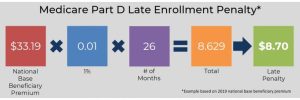
The Medicare Part D late enrollment penalty does not have a cap and continues to apply to those who delay enrollment without other credible drug coverage. This penalty:
- Is calculated as 1% of the “national base beneficiary premium” times the number of months a person was eligible but not enrolled.
- Is added to the monthly premium and lasts as long as the individual has Medicare Part D.
- Is not affected by the $2,000 out-of-pocket cap, which only relates to drug spending—not penalties.
Why the $2,000 Cap Matters
This change is a milestone in Medicare drug coverage reform, aimed at easing the financial burden on older Americans and those with chronic conditions. According to the Centers for Medicare & Medicaid Services (CMS), nearly 1.5 million Medicare enrollees had out-of-pocket drug costs over $2,000 in recent years—a number expected to rise as specialty drug prices increase.
Key Benefits of the 2025 Medicare Part D Out-of-Pocket Cap:
- Protects beneficiaries from high annual drug expenses.
- Encourages medication adherence by reducing cost barriers.
- Provides peace of mind and financial predictability.
Final Thoughts
The $2,000 out-of-pocket cap for Medicare Part D in 2025 is a game-changer. Whether you’re currently enrolled in Medicare or approaching eligibility, this reform helps you manage your prescription drug costs more effectively.
Need Help Understanding Your Medicare Options?
Speak to a licensed Medicare advisor to learn how this change affects your current coverage or how to prepare for 2025. The right plan can save you thousands.